

Gustaf Söderman, Business Developer in Water and Environmental Engineering at NCC, on future treatment technologies, PFAS risks, and why water infrastructure has become a security issue.
Access to clean tap water is something most people in Sweden take for granted. At the same time, drinking water supply is facing growing challenges—from climate change and chemical contamination to the risk of sabotage. These are some of the key topics that will be addressed at Sweden Water Expo in September, where NCC is one of the exhibitors. “We often say that we take responsibility for the entire water cycle. For us, that means combining construction and water treatment expertise within one organization, enabling us to deliver end-to-end solutions. Our specialist capabilities across the entire value chain set us apart, and that’s something we want to highlight at Sweden Water Expo,” says Gustaf Söderman.
He works as a Business Developer within NCC’s specialist division for Water and Environmental Engineering, which delivers water treatment plants, wastewater treatment facilities, and pumping stations for municipalities and water-intensive industries. While the sector faces significant investment needs—estimated by industry body Svenskt Vatten at approximately SEK 500 billion by 2040—Söderman remains cautiously optimistic.
“There is clearly a substantial infrastructure backlog, with many facilities needing to be upgraded or replaced within a relatively short timeframe. At the same time, awareness has increased. It’s more visible in the media—for example, during irrigation bans or when regions like Gotland face water shortages. Five years ago, this wasn’t as high on the agenda. Progress is being made, even if investment levels are still below what’s required.”
The challenges go beyond aging infrastructure.
“The more contaminants we release into the environment, the more complex it becomes to produce safe drinking water. PFAS is one of several emerging concerns. Both groundwater and surface water sources have been affected, which is driving demand for more advanced treatment technologies.”
Climate change is also impacting raw water availability. In some regions, capacity is insufficient during dry periods, while in coastal areas there is a growing risk of saltwater intrusion into groundwater reserves.
“This is leading to increased interest in alternative treatment solutions. On Gotland, for example, we have delivered desalination plants, and more municipalities are exploring similar options. There is also growing discussion around circular systems, where treated wastewater can be reused as drinking water. The technology is already available—the real barrier is public perception. People are reluctant to drink what was once wastewater, even when it has been fully treated.”
What is the most important issue for your clients right now?
“Sustainability is becoming increasingly central. This includes how facilities are constructed—using climate-neutral concrete, recycled materials, and appropriate equipment—as well as how they are operated. Energy-efficient processes and reduced chemical usage benefit both the environment and operational costs.”
Another emerging dimension is the changing security landscape.
“Security requirements have increased significantly, particularly following the war in Ukraine. Water treatment plants are now classified as protected infrastructure, which places stricter demands on physical security and information management throughout project delivery. Confidentiality around technical documentation and designs is much higher than before.”
What do you enjoy most about your job?
“No two projects are the same. Each facility has unique conditions that require tailored solutions, so the work never becomes routine. It’s also rewarding to contribute to something so fundamental. Many people don’t realize how privileged we are in Sweden—having access to high-quality drinking water directly from the tap at a very low cost. It’s easy to take that for granted.”
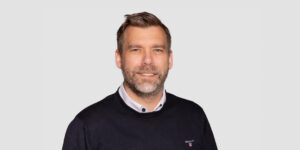
Facts:
Gustav Söderman
Titel: Business Developer, Water and Environmental Engineering, NCC
Focus: Business development and project delivery within water and wastewater treatment
Current: NCC will be exhibiting at Sweden Water Expo in September.