

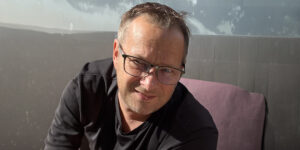
Peter Larsson, Sales Manager at GF/Uponor Infra, on disappearing expertise, future water infrastructure systems and the slow pace of climate transition in municipalities.
“Our participation is of course largely about what we can contribute with, but also about listening. What needs exist among clients, consultants and municipalities? At the same time, the industry is facing a generational shift that we need to find solutions to together,” says Peter Larsson.
GF/Uponor Infra works with underground systems for, among other things, wastewater, stormwater and industrial applications. A large part of the business involves developing and manufacturing plastic pipes – from 16 millimetres to four metres in diameter.
“I usually jokingly say that we work in the underground world. No one sees what we do. But if water stops coming out of the tap or you cannot flush the toilet, people notice. That’s when you realise how critical this industry actually is.”
You have worked in the sector for 20 years. What is the best part of the job?
“The people and the engagement. There are few industries where the collaboration between customers and suppliers is so close. Everyone wants to solve the problems together. The products themselves may not be very exciting, but the mission is important – and that creates pride.”
GF/Uponor Infra’s decision to exhibit at Sweden Water Expo is not only about business, but also about strategic issues.
“Stockholm provides proximity to authorities and national decision-makers. It opens the door to discussions about regulations, standards and upcoming requirements, for example regarding materials used in drinking water solutions. New material requirements are already expected from 2027, so it is important to stay one step ahead.”
How do you see the willingness to choose more sustainable materials?
“There is interest, but progress is slow. We have products with up to 55 percent fossil-free raw materials, which significantly reduces climate impact – but they cost a little more. That is then weighed against municipal investment budgets. At the same time, you have to think long-term: the less often we need to dig up infrastructure, the better it is for both the environment and the economy. I believe the requirements for environmentally friendly materials need to come from the top.”
In addition to climate adaptation, Peter Larsson sees skills supply as one of the sector’s biggest challenges.
“It is a problem that is becoming increasingly clear. We see many people retiring, while there are few clear educational pathways into the industry. Many people have learned from ‘Bosse at work’, and when that knowledge disappears we lose a lot of experience. That is where we all share a responsibility to both educate and attract new people.”
Peter Larsson believes that a meeting place such as Sweden Water Expo can play an important role in moving the industry forward.
“Suppliers, clients, consultants and students need to meet. We need to discuss the major issues together – climate adaptation, the skills shortage, future standards.”
With two decades in the sector, I assume you are an experienced trade fair veteran – what characterises a successful water industry exhibition?
“Focus and energy. Trade fairs that run for too long often lose momentum in the afternoon. You need engaging programme sessions and talks that bring people together, and a broad range of exhibitors so that the entire value chain is represented. When we capture different perspectives – from clients to suppliers – that’s when we find better solutions.”
Facts:
Peter Larsson
Title: Sales Manager, GF/Uponor Infra
Works with: Sales and business development within water and wastewater infrastructure
Current: GF/Uponor Infra will exhibit at Sweden Water Expo in September.